
Stone County Court Record Requests
Every court keeps its own records in Stone County. Circuit Court files belong to the Stone County Circuit Clerk. Chancery matters go to the Chancery Clerk. Justice Court holds its own traffic, DUI, county-ordinal, small-civil, and early felony-stage cases. City cases stay with Wiggins Municipal Court. Keep those lines clear. The Circuit Clerk's public-records form is a documented path for Circuit records alone, not a blanket request form for every court in the county.
- Identify the Stone County court, case number if known, document or docket needed, and a useful filing-date range.
- For Stone County Circuit or Chancery material from the electronic period, try the court-specific MEC/PAMEC route first, knowing that registration, charges, and access rules apply.
- Ask the originating Stone County clerk counter or office whether public inspection, a plain copy, a certified copy, or a written request is the right channel.
- For a Stone County Circuit record not available electronically, submit the signed Circuit Clerk request form with a clear description and approval of applicable reproduction costs.
- For Stone County Justice or Wiggins Municipal records, call the custodian for its current request and payment procedure because no official online document viewer was located.
A Circuit request also needs a usable case identifier. The Stone County docket search page walks through why you should match the court to the number before trusting it.
Stone County Court Record Custodians
Four record keepers can hold pieces of one Stone County search. Treba E. Davis is the Stone County Circuit Clerk. She keeps the Circuit Court of Mississippi Second Circuit Court District case docket and judgment roll. Samuel “Tom” Smith serves as Chancery Clerk for Eighth Chancery District Court matters. The justice-district dockets sit with the Justice Court Clerk. City court material sits with the Wiggins Municipal Clerk. Send the request to the right office. That single step spares you a delayed answer or an incomplete record.
Stone County Circuit Clerk
323 E. Cavers Avenue
Wiggins, MS 39577
601-928-5246
Monday through Friday, 8 a.m. to 5 p.m., except legal holidays.
Stone County Chancery Clerk
323 East Cavers Avenue
Wiggins, MS 39577
601-928-5266
Chancery case dockets, including domestic relations, estates, guardianships, and land or equity matters, follow this separate clerk route.
Stone County Justice Court sits at 231 Third Street in Wiggins and lists 601-928-4415. Wiggins Municipal Court, at 303 First Street South, lists 601-928-5443. The Stone County Chancery Clerk page lays out the separate Chancery custody route. Ask each lower-court clerk before you mail anything. Confirm the copy fee and the current written-request method first.
Kinds of Court Records
Three terms get confused constantly, so sort them out first. A Stone County case docket is the chronological index of procedural events. A filed document is the paper underneath an entry. Think complaint, indictment, petition, motion, exhibit, order, judgment, or affidavit. A certified copy comes from the clerk with a seal or certification. An official process may require that seal; a plain copy usually just serves personal reference, subject to the receiving organization's rules.
For Stone County Circuit and Chancery cases, MEC/PAMEC may show a docket sheet, notices, or electronic documents. That applies to participating non-restricted cases. A visible docket entry does not guarantee the linked document is public. Stone County Justice Court and Wiggins Municipal offer no electronic document viewer. Their counter and phone channels matter for traffic and city matters. Transcripts are separate again. Stone County lists no court reporter contact or transcript fee. A docket copy is never a transcript.
Stone County Court Record Layers
MEC/PAMEC is the natural first layer for participating Stone County Circuit and Chancery records. Public users register, pay an annual charge, and pay again for search output. The public terms limit access to non-restricted material. Some documents reach only attorneys of record. A needed document may be missing. The record may be older, or a certified copy may be required. In those cases the clerk's office becomes the next layer.
| Record layer | What it supplies | Where to confirm it |
|---|---|---|
| Stone County docket sheet | Chronological case events, settings, filings, and outcomes | Participating MEC/PAMEC account or originating clerk |
| Electronic document | Stone County filed paper, order, or notice when public access is allowed | MEC/PAMEC, subject to restrictions and charges |
| Plain copy | Informational copy from the actual Stone County record custodian | Originating clerk under that office's procedure |
| Certified copy | Stone County custodian-certified document for an official use | Originating clerk and published or confirmed fee |
Stone Circuit's online coverage statement covers criminal and civil cases from 2008-current. That is a statement of scope, not a substitute. Records requests still fill the gaps for unavailable documents, lower-court cases, and paper files outside that range.
Court Records: What They Contain
What is inside depends on the court and the case. Still, a docket always gives the procedural frame. Expect the case number, filing date, court, judge, case type, case caption, status, and entries. The entries appear in chronological order. Criminal dockets refer to the State and a defendant. Civil and Chancery files use the party roles that fit the case. Court settings, motions, orders, judgments, pleas, and post-judgment events then follow in time order.
| Case number and caption | Identifies the file and the parties or style used by the court. |
|---|---|
| Filing and status | Shows when the matter entered the court and whether a recorded status or flag is present. |
| Chronological entries | Lists filings, process, motions, hearings, orders, and later case activity. |
| Settings and disposition | May show a hearing date or the recorded outcome, but the latest entry or clerk confirmation controls. |
| Documents and redactions | Document images may be separate, restricted, withheld, or redacted even when the case itself is visible. |
Stone County Court Record Request Form
An online Circuit record is sometimes not enough. The Circuit Clerk's one-page Public Records Request gives a concrete route. The form asks for the date requested. It also wants your name, telephone number, email, and a clear description with date ranges. A criminal request calls for any identifying information you have plus a description of charges. You sign, approve the reproduction cost, and the office processes the request from there. The official Circuit Clerk forms index holds this form and the court's other forms.
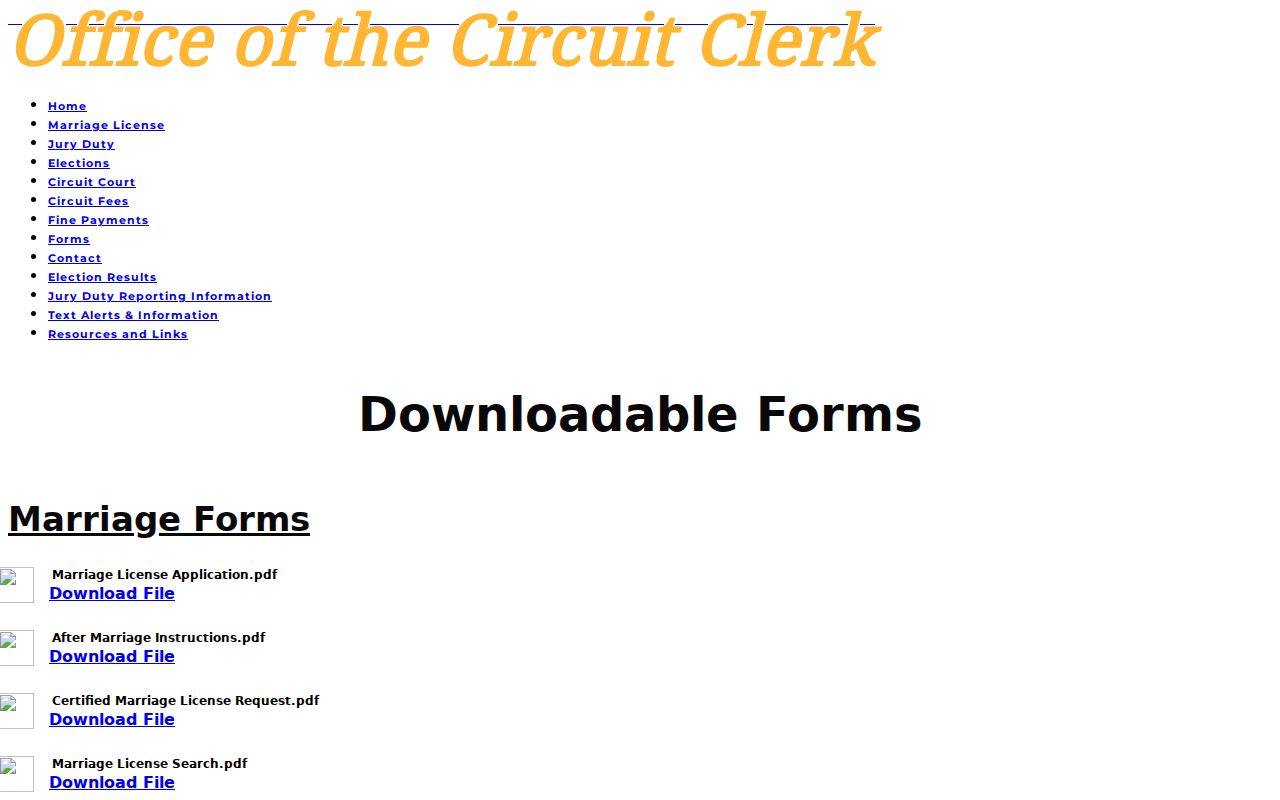
The form itself lists no fax, email, drop-box, or online-checkout instruction for copy requests. Confirm current delivery and payment details directly with the Circuit Clerk.
Copy Fees and Certification
What does a Stone County copy cost? The Circuit Clerk's fee schedule sets $0.50 per page for copies. Certification runs $1.50 per document. A record search runs $10 per name. The Circuit request form repeats the same math: $10 per name plus $0.50 per page if applicable. These figures belong to Stone County Circuit alone. Before paying for case documents from Justice Court, Municipal Court, or Chancery, ask that office what it charges. Go to the office directly. The Circuit Clerk's published fee page shows the full local schedule.
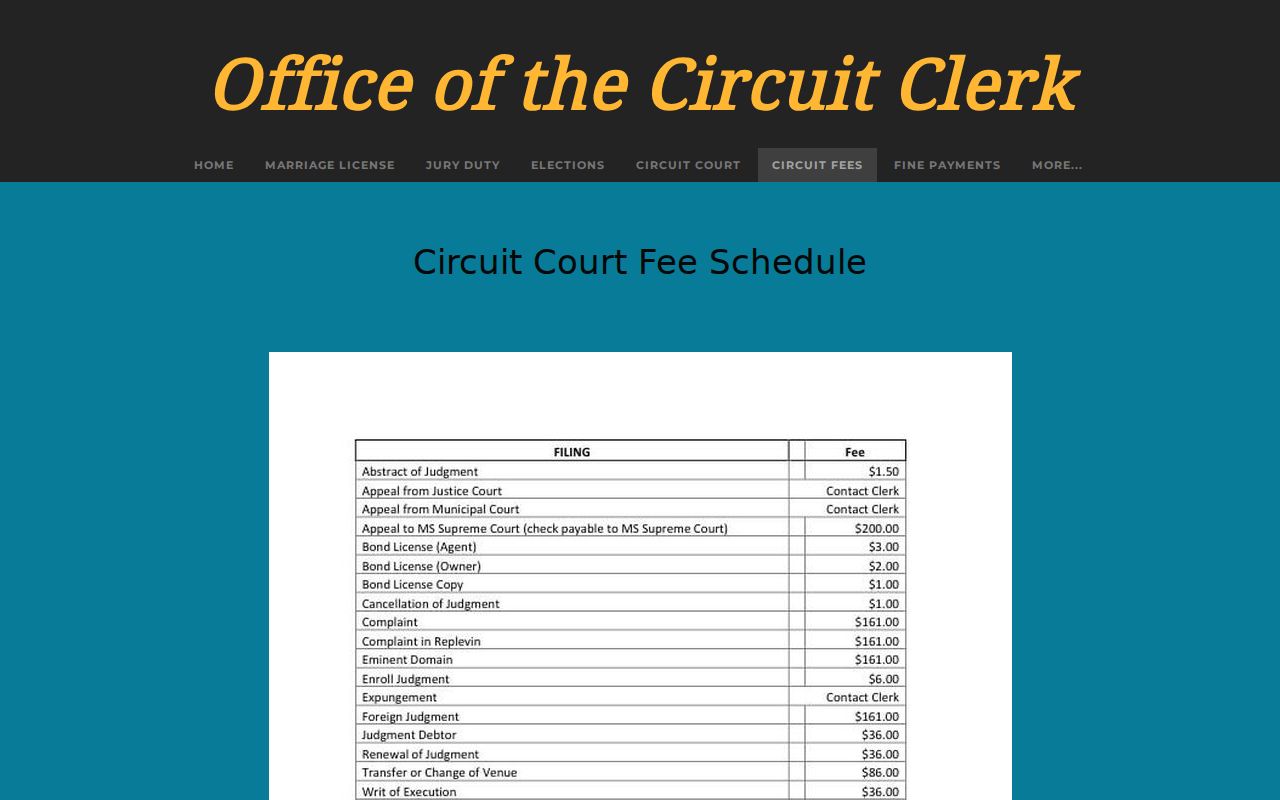
That official page backs up the Circuit Clerk's amounts, and a Chancery or lower-court request still needs its own quote from that court.
| Stone Circuit service | Published amount | Request note |
|---|---|---|
| Plain copy | $0.50 per page | Ask for page count and total before payment. |
| Certified copy | $1.50 per document | Request certification when an official authenticated copy is needed. |
| Record search | $10 per name | The request form repeats the per-name statement. |
| MEC/PAMEC access | $10 annual registration; $0.20 per output page | Applies to participating electronic access, not a clerk's certified copy. |
Stone County Court Record Archives
Paper files are only part of the story. Retention rules from the Mississippi Department of Archives and History govern the shelves. Docket books, minute books, and judgment rolls are permanent under those rules. Closed files carry their own retention periods, and electronic storage can stand in for paper. For older Stone County records, the MDAH county-records finding aid is a useful fallback. It lists Stone abstract books and an index to deeds. It is not a certified case file, though. Any deep search should start with the court that made the record. Ask the originating clerk about permanent docket books and archived files. Also ask whether MDAH microfilm covers what you need. The clerk decides whether an official copy can be issued, and how.
Access Rules for Court Records
Mississippi's Public Records Act opens the door to court records. But it is not the only rule in play. In Stone County, judicial records also answer to court rules, statutes, and individual access orders. Mississippi Code §§25-61-5, 25-61-7, and 25-61-11 cover inspection rights, fees, and other confidentiality laws. The Stone County Circuit request form promises a response within seven working days. That same form flags what the public cannot see. The list includes personal identifying information, personnel files, expunged files, grand-jury dockets, and no-true-bill information.
Restricted court material: Youth Court records are confidential under Mississippi Code §§43-21-259 and 43-21-261. Sealed, expunged, redacted, or restricted files need the access rule or court order that controls them; an ordinary request does not remove those limits.
The official Mississippi Public Records Act page is the state law source for the general request framework.
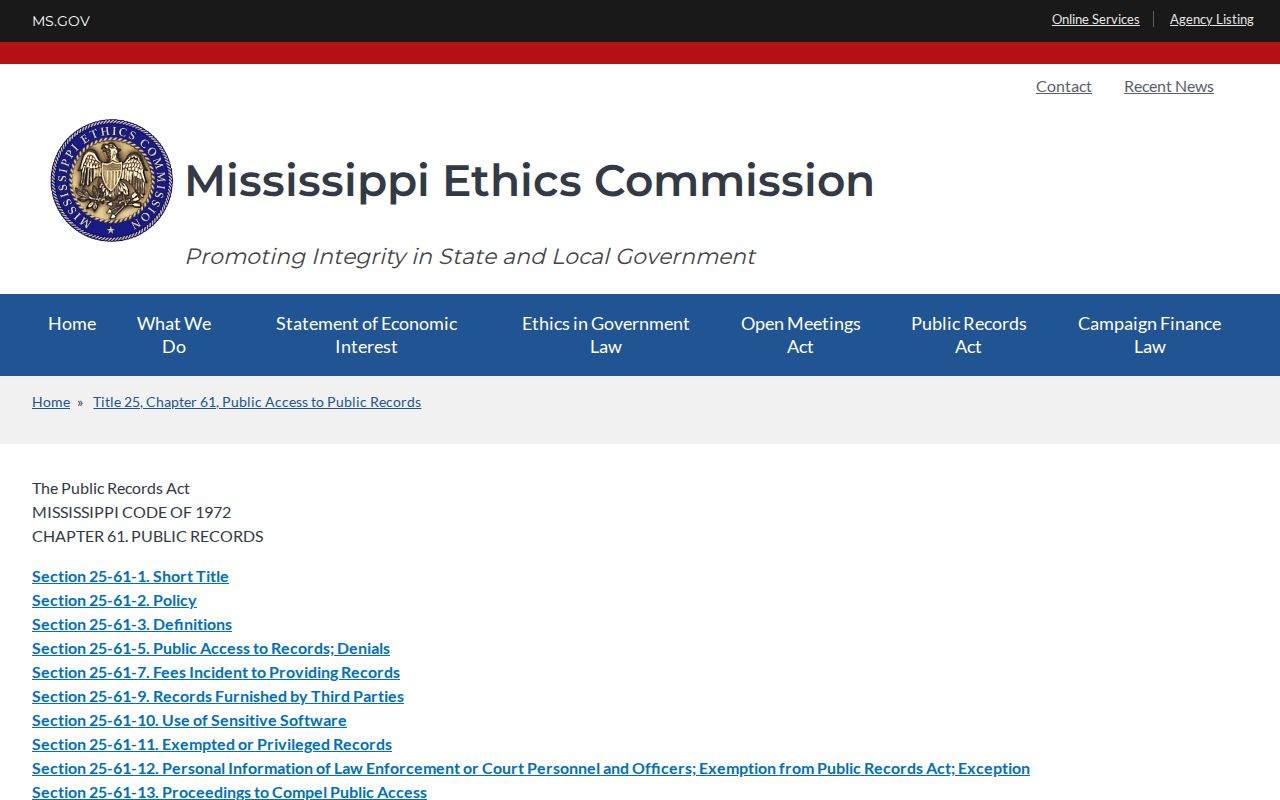
Judicial access still depends on the record's custodian and any controlling confidentiality rule.
Stone County Record Response Steps
Put a Stone County records request in writing. Doing that fixes the record, the date range, and the custodian in one place. The Circuit form commits the office to responding within seven working days of receipt. If something gets withheld, request a written denial. It should name the exemption or court rule that applies. That matters most for a juvenile, sealed, restricted, or expunged file. There the real answer may be a limit on public access rather than a different copy channel. The Mississippi Ethics Commission public-records page lays out complaint, mediation, and enforcement options for public-record disputes.
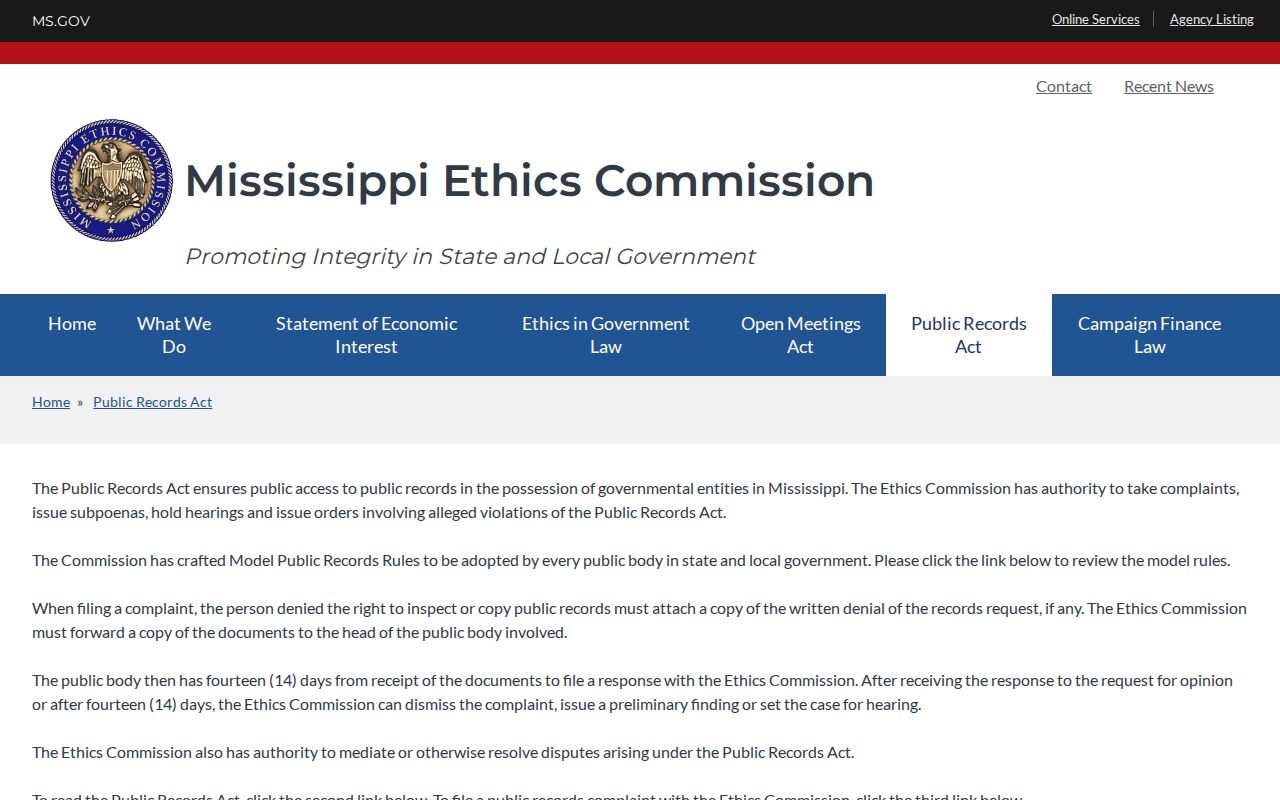
Court-held material keeps its own confidentiality rules, so confirm the next step with the clerk of the court that holds the file.